Life, Technology, and Meteorology

Year: 2006 (Page 2 of 5)

Buffalo Snow Storm

I just wrote a post on the Gaucho Software Forums about a snow storm that hit Buffalo a little over 10 days ago. It brought almost 2 feet of snow to the area and caused a lot of damage. I happened to be in the area at the time, so I was tracking the storm pretty closely, and I even took a few pictures of the aftermath. If you’re interested, check out the story here.

The story posting is part of a new weather discussion area I added to the forums. If you have any weather stories to share, feel free to start up a new topic and tell everyone about it. Also, bring along any questions you may have about anything relating to weather.

C4 Followup

A great time was had at C4 this past weekend. My trip started out Friday when I met up with John before the conference. I haven’t seen him since this past June, so it was great to hang out again. We went to this excellent Chinese food restaurant, and he showed me around the area a bit that afternoon.

The conference kicked off Friday evening with Wolf giving an introduction and Gruber following up with what was almost a UI state of the union address. After that everyone piled into a couple of busses to head over to Jaks. There I got a chance to talk with Elliot, who has been beta testing Seasonality now for almost a year. He’s working on a new add-on feature for Seasonality that I’ll post more about later.

Saturday kept the ball rolling with some excellent presentations by Brent, Aaron, Gus, Steve, and Brian. Brent talked about web services, and dropped a few references to Seasonality during his presentation (thanks Brent!). Gus gave a great introduction to Lua, which looks like an awesome embed-able scripting language. I’m toying with the idea of adding Lua support in Seasonality. Aaron gave some tips on how to get started with Cocoa and talked about going after the enterprise market. Steve talked about the programming language he created, Io, and how it handles concurrent programming, which was pretty cool. Finally, Brian gave a pretty good overview of Subversion and where the project is going in the near (and far) future.


All this great content was concluded with a panel led by DB. Several topics came up during the talk, like suggestions to Apple from the independent developer standpoint, what technologies and frameworks are under/over utilized, and of course some shouting over DRM. 😉 Afterwards everyone headed over to Gino’s for some grub. Speaking of grub, the food at this conference was much better than WWDC. Jamba Juice was brought in Saturday afternoon, plenty of caffeine was available at all times, and the other meals were excellent.

Since the content of this conference isn’t under NDA like Apple’s WWDC is, there were a lot more people taking photos of the sessions and events. You can check out my photos here. John Gruber got a shot of me looking like I’m about to attack. 🙂 I look a lot friendlier in a photo James Duncan Davidson took of the audience.


Thanks go out to Wolf for doing an excellent job of putting the conference together. Here’s hoping for a C4 2.0 next year.

C4

I’m getting ready to head off to C4 tomorrow morning. I was pretty excited when I first heard Wolf was putting together this conference, and signed up the day after he publicly announced it. With people like Wolf, Gruber, Brent, Gus, and DB all presenting there, along with some people I haven’t met (Steve DeKorte and Brian Fitzpatrick), this should be a really good conference. Things have been pretty crazy here the past few months, so it will be good to get away from the usual work and spend some time socializing with other developers.

While I’m in the Chicago area, I’ll also get a chance to spend some time both with John and my cousin, so that will be pretty cool as well. I’m hoping to have some time left-over for photography, but we’ll have to see how it goes. The Chicago Marathon is this Sunday, so that might give me a chance to practice some action photography.

Anyway, if you see me at C4, be sure to say hello.

the Bleat

James Lileks of the Star-Tribune in the twin cities writes:

I have a new program that displays weather information from a variety of cities – such things are plentiful, I know, but this one suits my needs. It’s set up to tell me how things are in Mpls, Fargo, NYC, Scottsdale, and Glockamorra. Right now it’s 96 degrees in Scottsdale. At eight PM.

Sometimes I miss Arizona weather… The warm nights were wonderful. Want to go for a walk or bike ride in the evening? No problem, just walk outside. Don’t bother with a jacket (or even long sleeves). Of course monsoon season is incredible as well.

Seasonality 1.4b1 Public Beta

With the lack of forecasts available in Seasonality 1.3.x, I decided to release a public beta of Seasonality 1.4. This way, international users can get a forecast back as soon as possible. There are a couple of other key features that are available with this update. One is the new moon phase/moonrise/moonset functionality that I talked about in an earlier post. The second is the ability to add custom locations in Seasonality. Since Seasonality no longer depends on the limited number of locations for which Environment Canada provided forecasts, the app can now display weather data for any location. The interface for this is still fairly basic in the beta, but it will be improved before the final release. Another feature in the pipeline for Seasonality 1.4 is the ability to edit locations. Right now you can check out the Location Info Panel (via the Window menu) to show the configuration of your current location. The plan is to make those fields editable in the near future.

This is the first public beta I’ve ever released. I was a little bit nervous putting out a beta release publicly, but so far it’s been going pretty well. There haven’t been any bug reports yet, which is great. I’m guessing there has to be at least one or two minor bugs in there somewhere, but it’s comforting that no-one has noticed anything yet.

Rio Benchmarks

After installing the new Athlon X2 4600+ processor in Rio, I have to say I’m very impressed with the performance gains. Not only was I able to re-install Kubuntu server and get all the necessary packages installed again quickly, but the overall responsiveness of the machine is greatly improved while multitasking. This is especially noticeable with running 2 virtual servers using VMware Server.

So what about the benchmarks? I decided to start with the svnmark that Luis introduced on his blog, and downloaded Subversion 1.3.0 (1.3.2 is available, but the last benchmarks I did previously used 1.3.0). After a couple of runs, I found make -j4 to be the quickest. Here are the numbers:

Mac Pro Quad 3Ghz: 0:53
Dual Core Athlon 64 2.4Ghz: 1:27
Quad 2.5Ghz G5: 1:39
MacBook Pro Dual 1.83Ghz: 2:11
Dual 2.5Ghz G5: 2:35
Single Core Athlon 64 2Ghz (same server before upgrade): 2:59

After running this test and seeing the Athlon X2 compile faster than even a Quad G5, I’m pretty happy. Granted, the OS is Linux and not Mac OS X, but I doubt Linux would be that much more efficient when compiling software using gcc.

So how does it stack up with the forecast processing I need the server to do? Well in this case, I don’t have any solid benchmarks, I’m just running off memory here. The old processor was able to generate and serve a forecast in 0.4 seconds, where the new one can do the same request just under 0.3 seconds–a pretty solid 25% performance gain. This is all sequential code, so this doesn’t take into account the availability of a second processor. The forecast update is also a lot quicker, and with a second core the machine should still be able to handle connections from Seasonality to generate forecasts while updating the forecast database back-end.

Super Typhoon Ioke

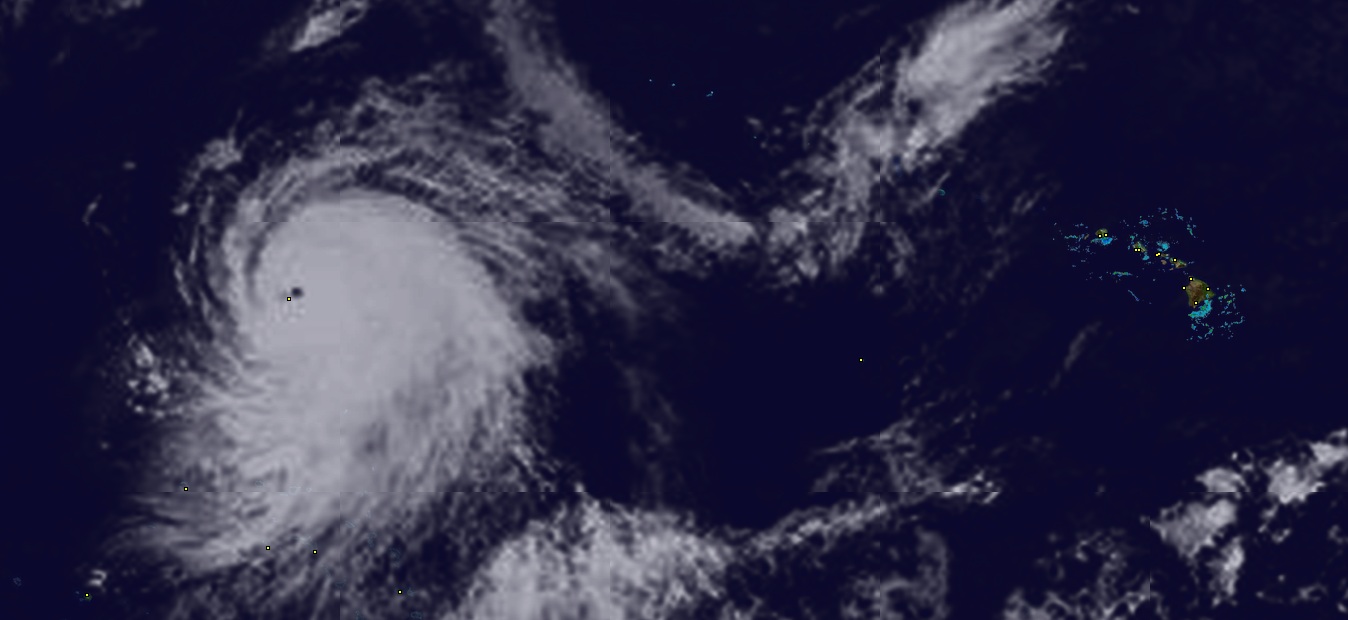
Check out this incredible satellite image taken from Seasonality of Super Typhoon Ioke. Ioke is the strongest typhoon in recorded history to form in the central Pacific Ocean, with sustained winds of 160 mph and gusts up to 185 mph. That yellow dot in the middle of the storm is Wake Island, a territory of the U.S. The storm surge was supposedly going to completely engulf the island, so all 200 people who live there were evacuated and flown out to Hawaii.

It’s rare to see such a large storm with a organized center “eye” like this. Click on the image to get a larger view that shows a reference of where this is taking place. If you are wondering if Hawaii is at risk, don’t, because the storm is heading in the opposite direction. It is projected to weaken to the equivalent of a category 3 hurricane by next Tuesday, still in the middle of the Pacific.

Rio Upgrade

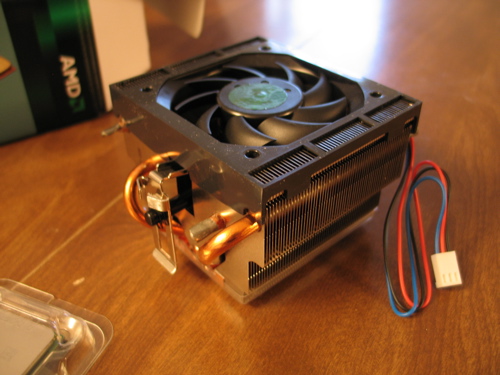
With the additional resource requirement I wrote about a couple of weeks ago, I ended up deciding it was time to upgrade the server here (Rio) with some additional CPU hardware. When building Rio late last year, I wanted to make sure the hardware was fairly upgradable. The easy choice at the time was to go with Athlon 64 processors, since I could start with a pretty basic 2Ghz single core chip, and have the option to upgrade to a dual-core CPU later on. Well, that time is now, and today the new processor arrived. I ended up purchasing an Athlon 64 X2 4600+ processor, which boils down to a 2.4Ghz dual core CPU. Fortunately, with AMD’s price drop just a couple of months ago, I didn’t pay much more for this processor than I did for the original.

One thing I was a bit surprised with was the difference between the new and old heat-sinks. I wasn’t expecting much of a difference between retail CPUs in the same processor line-up, but the new one is of a much higher quality. Here’s a picture…

So now I have to do some real-world benchmarking to find out just how much faster this CPU will go. I suspect the database importing times will improve dramatically, and the server will be much more usable while the update is taking place with the additional core. I’ll probably post again here with some benchmarks when I’ve had a chance to try things out.

With most of the forecast back-end work complete, I’m hoping to release a public beta sometime later this week or maybe next week. I just need to finish tweaking performance for the new CPU and smooth out some database replication issues. It sure will be a relief to have this new forecast system online.

WWDC Keynote Thoughts

Between all the great sessions here at WWDC yesterday and Buzz’s excellent blogger party last night, I’ve had just about 0 time to blog about anything that has been announced here. The typical news sites have been posting all the details on Mac OS X Leopard that Steve talked about yesterday, but I thought I would add a couple of my own comments on Leopard.

First, though I’m under NDA for a lot of the content here, I’ll just say that Leopard adds a lot of nice features for developers. I would not be surprised to see a lot of applications next year requiring Leopard. I’m sure some Tiger/Panther users will feel a bit left out, but the development time can be collapsed greatly, and these apps will be a lot more polished.

64 bit is a big buzzword around here. It is a big deal…even with 64 bit POSIX available at the UNIX layer in Tiger. That was nice, but it meant that only command-line applications that used straight POSIX libraries would have the ability to run 64 bit. As was mentioned in the keynote, Apple has extended 64 bit support all the way up to the Cocoa and Carbon layers…completing the transition to 64 bit for Mac users. I think this will allow some very high-end scientific applications to provide absolutely beautiful visualization displays without having to write a bunch of extra code to handle 64 bit data processing in a different process on the back-end. I haven’t tried building Seasonality for 64 bit yet, but I suspect that it will provide a slight speed improvement on 64 bit machines because the satellite image is highly accelerated in hardware using the Accelerate framework. 64 bit processors may be able to generate a new satellite image up to twice as fast. I’ll update my blog with performance results on this sometime in the future.

Mail.app changes seem to be aplenty. I haven’t loaded the Leopard preview on my MacBook Pro yet to see just how much has been improved, but already I’m impressed. The templates look to be a good idea, but I can’t see myself using them too often. I’m sure there will be a subset of Mac users that will get a kick out of that though. The notes feature strikes me as a big chunk of bloatware tacked on to Mail. If you need to take notes, there should be another place to do it outside of your inbox. Sure, people spend a lot of time in Mail, and I’m sure a lot of people take notes while reading/responding to email, but that doesn’t mean that notes should be an integrated feature. It seems that a much better solution to write a new system-wide notes application that would let you bring up an interface with a hotkey, type something in, and dismiss it.

Apple still hasn’t updated the Finder. I really hope this is one of the “top secret” features they aren’t releasing until the end. The Finder is something Mac users spend a lot of time using, and the amount of legacy code still in there is pretty staggering. At the very least, the Finder needs to use more threading, but really they should start from scratch and try to implement something that is more efficient. They should also revisit usability. When using the Finder with a modern system with several hundred thousand files, it takes awhile to navigate to where you want to be (Note: this applies to all the current file-system-exploring applications I’ve used on any platform). Spotlight improves this situation somewhat, but it is still a pretty big problem and will only get worse as hard drive capacities skyrocket as they have been in recent years.

Despite these drawbacks, Leopard as a whole is a big improvement. Time Machine and Spaces are greatly welcomed, Core Animation will be a huge win for the usability of Leopard applications and the iChat improvements seem pretty solid.
« Older posts Newer posts »

© 2026 *Coder Blog

Theme by Anders NorenUp ↑